A while ago somebody posted a link to a piece of software which could analyse what key a sample is in and change it's key without changing it's length if you wished.
I've done a forum search but I simply can't find it now.
The reason why I'd find this so useful is because when I sample something I'd like it to be in key with the keyboard.
Can anybody help and recommend any software which can do this with a sample?
Software which analyses what key a sample is in?
Forum rules
By using this "Production" sub-forum, you acknowledge that you have read, understood and agreed with our terms of use for this site. Click HERE to read them. If you do not agree to our terms of use, you must exit this site immediately. We do not accept any responsibility for the content, submissions, information or links contained herein. Users posting content here, do so completely at their own risk.
Quick Link to Feedback Forum
By using this "Production" sub-forum, you acknowledge that you have read, understood and agreed with our terms of use for this site. Click HERE to read them. If you do not agree to our terms of use, you must exit this site immediately. We do not accept any responsibility for the content, submissions, information or links contained herein. Users posting content here, do so completely at their own risk.
Quick Link to Feedback Forum

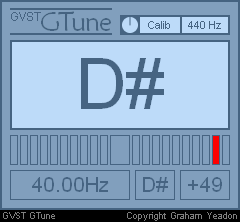

Thanks for those replies.
But would the tuning by ear method and GTune preserve the original length of the sample and keep its integrity?
I do remember somebody on here mentioning a handy piece of software that would be able to read what key the sample is in and automatically adjust it whilst preserving its quality. But I can't for the life of me find that thread.
When it comes to isolating specific notes I don't trust my own ear. I could play a simple piano key but trying to compare the note with a sample which sounds nothing like a piano I'd find difficult to get it spot on. I'd rather there was a more accurate, quicker, and efficient way of doing it.
But would the tuning by ear method and GTune preserve the original length of the sample and keep its integrity?
I do remember somebody on here mentioning a handy piece of software that would be able to read what key the sample is in and automatically adjust it whilst preserving its quality. But I can't for the life of me find that thread.
When it comes to isolating specific notes I don't trust my own ear. I could play a simple piano key but trying to compare the note with a sample which sounds nothing like a piano I'd find difficult to get it spot on. I'd rather there was a more accurate, quicker, and efficient way of doing it.
-
deadly_habit
- Posts: 22980
- Joined: Tue Oct 24, 2006 3:41 am
- Location: MURRICA


I've heard about this little software that can scan all your sample folders and attach the appropriate key at the end of every file name. If there's anyone in the know about this little handy thing - pls let me know. Time is money and I dont want to spend my hours on doing something that can be done mechanically for me.
-
futures_untold

- Posts: 4429
- Joined: Thu Dec 13, 2007 9:25 pm
- Location: London
- Contact:
Sample length & pitch are intrinsicaly tied unless you use timestretching.
You can test this yourself with a 30cm ruler. Twangin it off the edge of your desk at 30cm and then at 15 cm. At 15 cm the pitch is one octave higher!
All plucked and wind instruments work on this principle, ei adjusting the length of the string/air chamber to adjust pitch.
If you are creating a sample set, the best option is to sample every note in the octave for the entire range of the instrument. Obviously this will lead to a lot of hd space being used, so you could sample at intervals ie, one sample per octave or one sample per 3 semi tones assuming your using an instrument with chromatic tuning.
Or if you really must, invest in a timestretching program. Adobe Audition has a built in timestretcher.
You can test this yourself with a 30cm ruler. Twangin it off the edge of your desk at 30cm and then at 15 cm. At 15 cm the pitch is one octave higher!
All plucked and wind instruments work on this principle, ei adjusting the length of the string/air chamber to adjust pitch.
If you are creating a sample set, the best option is to sample every note in the octave for the entire range of the instrument. Obviously this will lead to a lot of hd space being used, so you could sample at intervals ie, one sample per octave or one sample per 3 semi tones assuming your using an instrument with chromatic tuning.
Or if you really must, invest in a timestretching program. Adobe Audition has a built in timestretcher.
-
deadly_habit
- Posts: 22980
- Joined: Tue Oct 24, 2006 3:41 am
- Location: MURRICA
http://hypermammut.sourceforge.net/paulstretch/futures_untold wrote:Sample length & pitch are intrinsicaly tied unless you use timestretching.
You can test this yourself with a 30cm ruler. Twangin it off the edge of your desk at 30cm and then at 15 cm. At 15 cm the pitch is one octave higher!
All plucked and wind instruments work on this principle, ei adjusting the length of the string/air chamber to adjust pitch.
If you are creating a sample set, the best option is to sample every note in the octave for the entire range of the instrument. Obviously this will lead to a lot of hd space being used, so you could sample at intervals ie, one sample per octave or one sample per 3 semi tones assuming your using an instrument with chromatic tuning.
Or if you really must, invest in a timestretching program. Adobe Audition has a built in timestretcher.
for a killer free timestretching app
-
futures_untold
- Posts: 4429
- Joined: Thu Dec 13, 2007 9:25 pm
- Location: London
- Contact:
CheersDeadly Habit wrote: http://hypermammut.sourceforge.net/paulstretch/
for a killer free timestretching app

Checking it out now!

Who is online
Users browsing this forum: No registered users and 0 guests